How the common trees ranked
UF/IFAS Extension's "Selecting Coastal Plain Species for Wind Resistance" (FOR119) sorts trees into four groups, from highest to lowest wind resistance, using post-hurricane studies and a survey of tree experts. The survival figures below are from its Hurricane Ivan data. For the oaks, UF/IFAS recalculated survival so that any tree losing half or more of its branches counts as lost; the pine figures are the survival rates the publication reports for pines.
| Tree | UF/IFAS group | Survival after Ivan | Also noted |
|---|---|---|---|
| Sand live oak | Highest | 98% | Best of the oaks studied |
| Live oak | Highest | 81% | 78% in Hurricanes Charley and Andrew |
| Slash pine | Medium-low | 71% | 2–3% of standing trees died within three months |
| Laurel oak | Lowest | 66% | Survival well below live and sand live oak across four Panhandle hurricanes |
| Water oak | Lowest | 65% | |
| Loblolly pine | Medium-low | 64% | |
| Longleaf pine | Medium-low | 57% | 2–3% of standing trees died within three months |
| Sand pine | Lowest | 43% | 56% of the standing sand pines died within three months |
The publication's own conclusion is the one to remember: no species and no tree is completely windproof. Branch loss, size, soil and health all change how a given tree does.
Laurel oak: the short-lived oak
Laurel oak and live oak are both oaks, but in UF/IFAS's rankings they sit at opposite ends. UF/IFAS's laurel oak fact sheet gives the species a life span of 50 to 70 years and says the tree hollows with age as it approaches 50 years old. Trunks and large branches often hollow from decay, and a small trunk wound or poor pruning cut can start a column of decay 10 feet long or more. The fact sheet calls the tree susceptible to breakage and says a strong branch structure has to be developed while it's young.
A laurel oak that's big and old, sits over the house, and shows a cavity, fungus or dead limbs is the tree most worth having looked at before hurricane season. See dead or leaning trees for the signs.
Live oak and sand live oak: the keepers
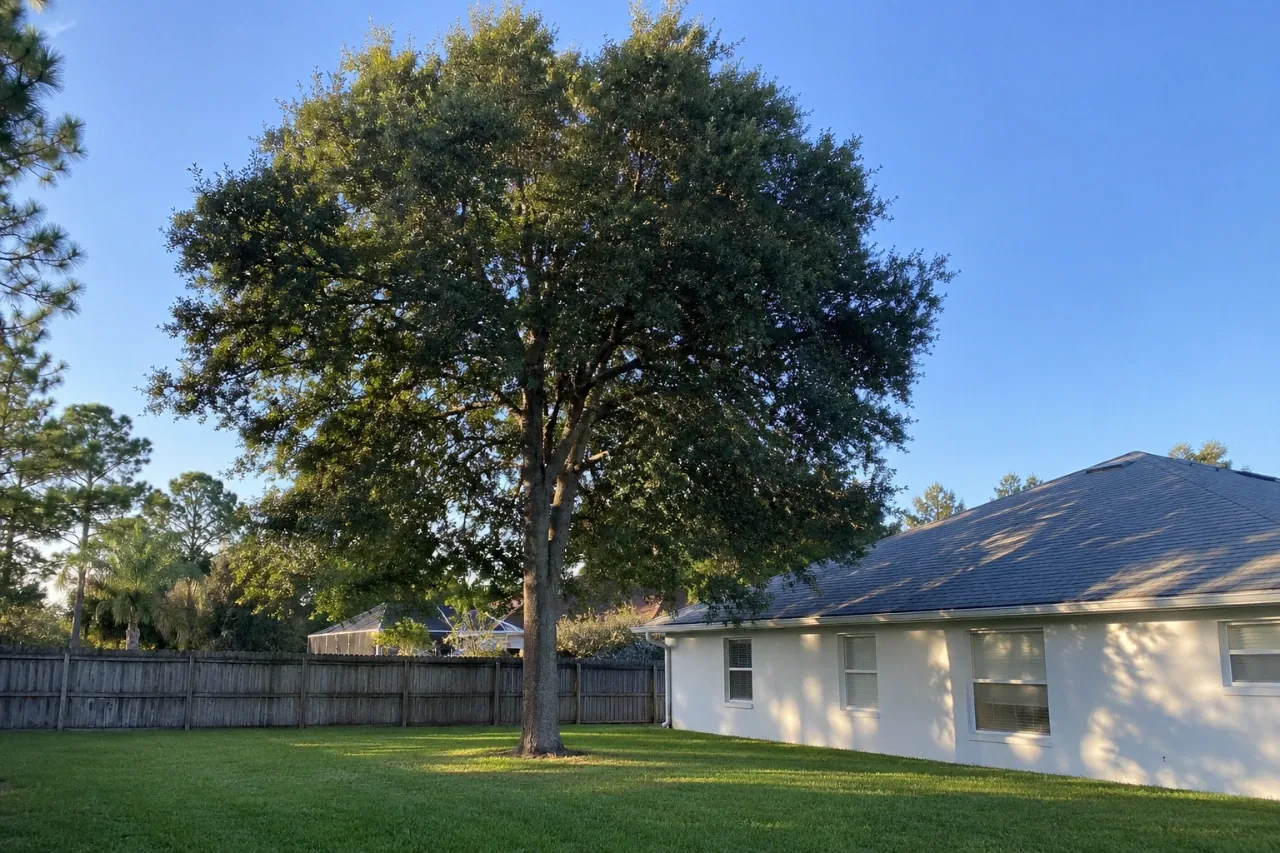
Both sit in UF/IFAS's highest wind-resistance group. Live oak often stays standing even after losing big branches, which is why its survival drops when heavy branch loss is counted. A healthy live oak is usually worth trimming and keeping rather than removing, and the city's code protects large ones: an oak with a trunk of 18 inches or more is a specimen tree, and one of 36 inches or more is historic.
Pines: the storm isn't the end of it
Pines can survive the wind and die months later. UF/IFAS's tropical species publication found that three months after Hurricane Charley, 27 percent of standing south Florida slash pines and 48 percent of standing longleaf pines had died. The Florida Forest Service explains much of the delayed loss: Ips engraver beetles and black turpentine beetles attack storm-stressed pines, including trees that bent in the wind or have hidden root damage, and the year after a storm is when activity is especially likely.
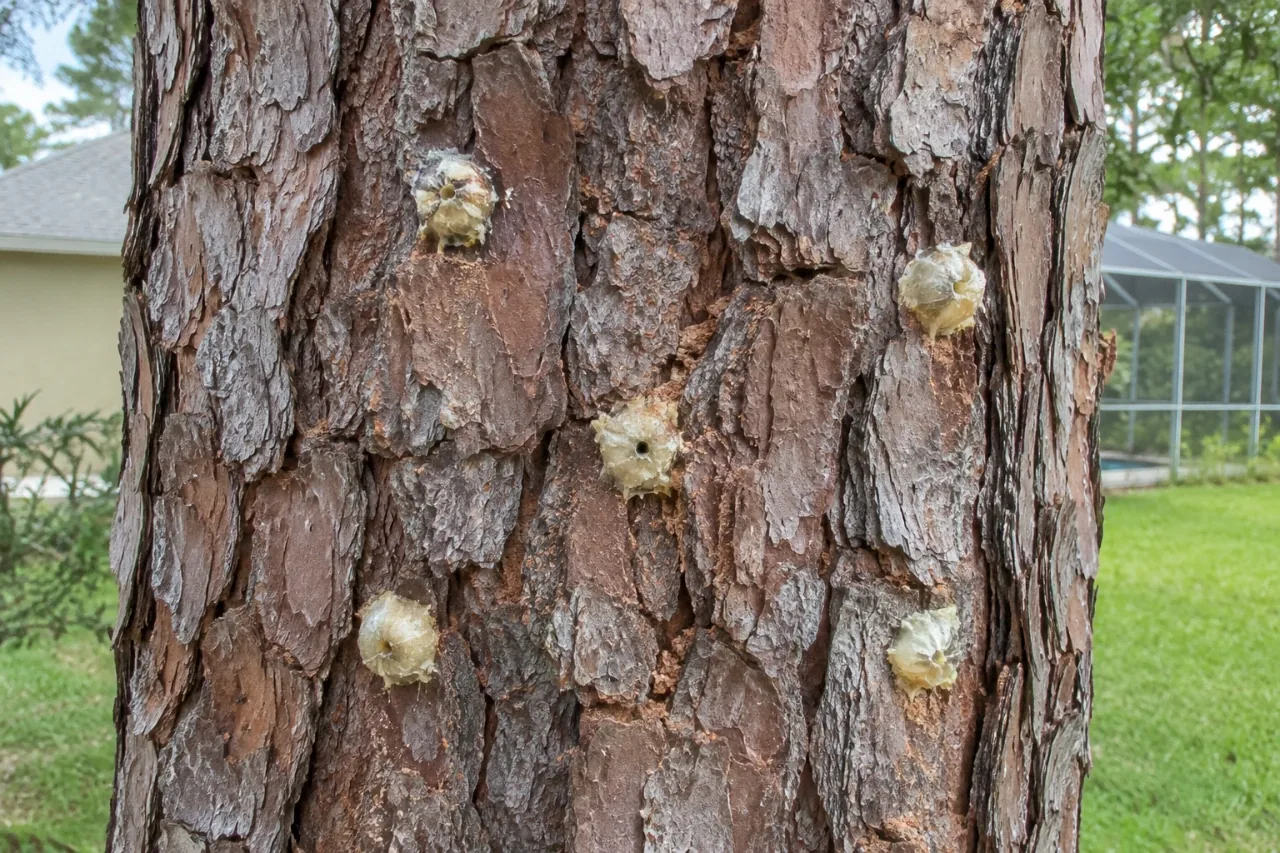
Watch storm-bent pines near the house through the following year. Resin pitch tubes on the bark, boring dust, and a crown fading from green to yellow to brown are the signs, and the fading crown often comes last. The city code lists any pine within 30 feet of a structure, or closer to it than the tree is tall as a case it can approve for removal.
Palms
Palms generally come through hurricanes better than broadleaf trees. In UF/IFAS's data, 88 percent of palms survived Hurricane Charley against 77 percent of other species, because a palm can lose every leaf and keep the bud that grows new ones. Sabal palm isn't on the ranked lists, but 99 percent of the experts surveyed rated it highly wind resistant. The way to ruin that advantage is the "hurricane cut"; see palm trimming.
What makes any tree stronger
UF/IFAS's research points to a few things a homeowner can control:
- Root space. The more rooting space a tree has, the healthier it is and the better it is anchored.
- Pruning. Pruning gave broadleaved trees more wind resistance. See tree trimming.
- Groups. Trees growing in groups or clusters held up better than trees standing alone.
- Health. Decay, dead wood and root damage undo a species' natural strengths.
Choosing a replacement tree
If the city requires a replacement after a removal, it follows the city's Table 11-4. A specimen tree is replaced with a shade tree, planted at 2-inch caliper, and clusters of three palms can stand in for some required shade trees. UF/IFAS's highest wind-resistance group includes live oak, sand live oak, southern magnolia and bald cypress. Plant it where it has room to grow and well away from overhead lines; FPL publishes "right tree, right place" guidance on what to plant near its lines.
Hurricane season
The Atlantic hurricane season runs from June 1 through November 30, according to NOAA. The months before it starts are the time for inspections, trimming and planned removals, while crews have time and the brush can be hauled away.
Questions homeowners ask
How can I tell a laurel oak from a live oak?
Their leaves and bark can look alike. A contractor, or your county's UF/IFAS Extension office, can help identify the tree if it matters for your decision.
Should I take down every laurel oak near the house?
Not automatically. Age, size, decay and what's underneath decide it. A young, well-shaped tree is a different case from a large, old one with a cavity.
My pine survived the storm. Is it safe?
Not necessarily. Pines bent in the wind can die from bark beetles in the following year. Watch it, and have it looked at if the crown starts to fade.
Are palms safer to keep near the house than oaks?
Palms survived hurricanes at higher rates in UF/IFAS's data, but no tree is windproof. A palm with a full, healthy crown does best.
This site passes your request to one independent local contractor. It does no tree work itself.
- UF/IFAS Extension, FOR119/FR174, Selecting Coastal Plain Species for Wind Resistance; FOR120/FR175, Selecting Tropical and Subtropical Tree Species for Wind Resistance; Quercus laurifolia: Laurel Oak (ST549, revised 2018).
- Florida Forest Service Forest Health Section, post-hurricane bark beetle guidance (2025).
- City of Palm Coast Unified Land Development Code Chapter 11. NOAA Climate.gov, hurricane season dates. FPL, Right Tree, Right Place.